Last week Victoria took a significant step forward in advancing Australia’s offshore wind industry; opening the nation’s first offshore wind auction for an initial 2GW of offshore wind capacity.
The Request for Proposal process marks the transition from policy ambition to project investment, inviting developers to compete for long-term contracts. Proposals will be assessed on factors including value for money and deliverability, reflecting the scale and complexity of bringing a new energy industry to market.
The Victorian Government estimates the first 2GW tranche could generate enough electricity to power around 1.5 million homes each year, with the auction scheduled to close in August 2027 and contracts expected to be awarded in 2028.
As Australia’s offshore wind sector moves from planning to implementation, attention is increasingly turning to the infrastructure, supply chains and port capability needed to support delivery at scale.
For ports, industry and governments, the question is no longer whether offshore wind will arrive, but how Australia prepares the enabling infrastructure required to make it a success.
It means looking beyond generation zones and transmission planning, and asking whether we have the staging ports, logistics and marine infrastructure required to build these projects safely, efficiently and at scale.
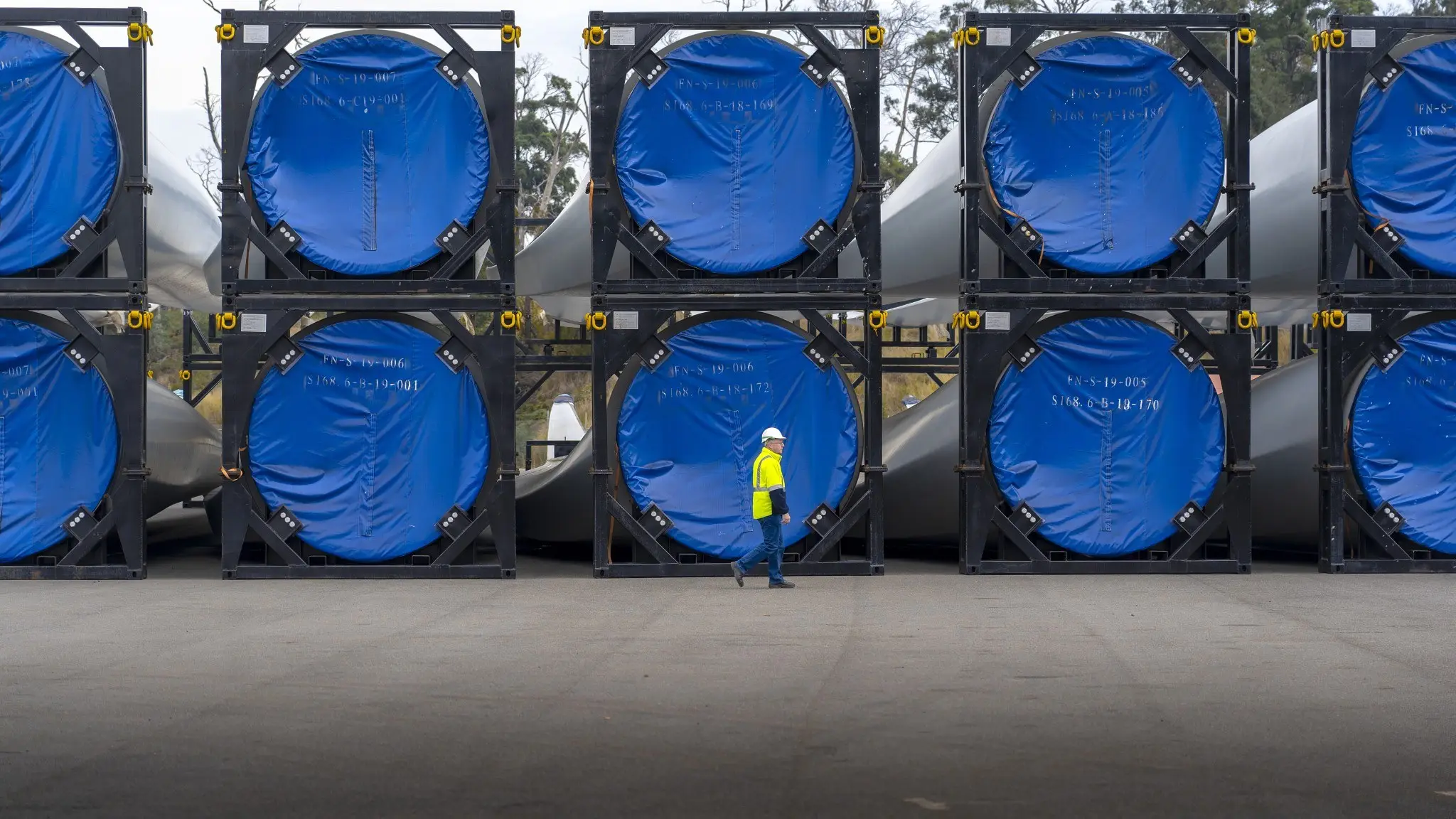
Port readiness is not simply about having a berth available. These projects need deep-water access, heavy-lift wharf infrastructure, large laydown areas, high-load pavements, marine operational capability, workforce readiness, and integrated logistics planning. Combined, these requirements represent an unprecedented scale for Australia and will require efficient approval pathways to enable their delivery.
These capabilities need to be in place before any offshore wind project can commence construction. If port developments are not prioritised ahead scheduled rollouts and project development pathways de-risked, Australian states like Victoria risk falling short of its legislated target of 2 gigawatts (GW) of offshore wind by 2032 and 9 GW by 2040.
Globally, mature offshore wind markets have shown that ports must be planned as core enabling infrastructure from the outset - not treated as a downstream delivery issue.
In Europe, WindEurope has highlighted that multi-port strategies will become increasingly important as offshore wind scales, with ports specialising across manufacturing, pre-assembly, installation, operations, maintenance and storage.
The lesson for Australia is clear: offshore wind delivery is not built around a single gateway, but around a connected system of complementary ports, each playing a defined role in a broader supply chain.
Australia needs to apply that lesson in a way that reflects our geography, project pipeline and emerging supply chain. We should not wait for bottlenecks to appear before building the infrastructure and partnerships required to solve them.
At TasPorts, we see offshore wind as a major opportunity for Tasmania and South Eastern Australia. We are positioning our port network to support a coordinated national delivery model that helps turn project ambition into practical delivery.
A key part of that work is the Bass Strait Renewable Energy Terminal (BRET), at Bell Bay. The enablement of Australia’s offshore wind industry is a core pillar of the project.
Historically, Australian states have competed for major infrastructure and investment opportunities, but offshore wind requires highly specialised port capability that is best delivered through a coordinated multi-port system, with jurisdictions like Victoria and Tasmania working together.
This approach can provide the step change in port capability Australia needs, while lowering delivery risk, giving developers greater flexibility and allowing design efficiencies to be achieved across complementary port locations.
The Port of Bell Bay is well placed to be a key strategic part of that model. It has deep-water self-scouring berths, sheltered year-round access, scalable reclaimed land, and is located next to Tasmania’s largest industrial precinct. It is also geographically closer to many planned offshore wind farm sites than some mainland alternatives, supporting shorter transit times, lower project costs, and more efficient delivery schedules.
Bell Bay can play a strategic role alongside ports such as Hastings, Geelong and Burnie, with each location port supporting different aspects of construction, logistics, storage, trade, operations or maintenance.
The critical bottleneck is not only physical infrastructure. It is sequencing.
Port upgrades, vessel availability, manufacturing, transmission, approvals, workforce capability, commercial agreements and proponent commitments all need to line up. If one part of the system falls behind, the whole delivery pathway becomes harder, more expensive - and less certain.
That’s why early collaboration matters.
Developers, ports, logistics providers, contractors and governments need to plan as one connected system. Clear demand signals from industry and government will help de-risk investment, support commercially disciplined infrastructure planning, and build confidence across the supply chain.
The Victorian Govenment has committed funding to progress environmental assessment work for the Victorian Renewable Energy Terminal at the Port of Hastings, and I support this progress.
But offshore wind is a globally competitive industry. Europe and Asia are already rolling out significant capacity, supported by mature supply chains, established port networks, and clearer project pipelines.
For Australia to compete for investment, vessels, equipment and expertise, industry needs confidence that there is a long-term pipeline of projects — not isolated developments competing for limited resources.
That confidence is critical to achieving scale. Without a clear view of Australia’s offshore wind industry beyond the first projects, it becomes harder for ports, developers and supply chain partners to justify the investment needed ahead of demand.
A sequential pipeline can create the economies of scale required for major port infrastructure, but it also increases the risk that a delay in the first project ripples through the rollout of those that follow. A coordinated port network helps manage that risk by spreading capability across locations and reducing dependence on any single project pathway.
We have heard strong support from developers for an approach that gives projects greater choice, reduces reliance on any single location and helps manage the practical challenges of sequencing, approvals and delivery.
For Tasmania, that means positioning Bell Bay’s location, industrial base and marine capability as a strategic part of a broader national solution, while drawing on the wider TasPorts network and complementary mainland ports to give industry greater certainty as projects move from planning into delivery.
By 2030, success should mean Australia has moved decisively from planning to delivery. Priority port infrastructure, approvals, commercial pathways, and supply chain capability should be aligned to real projects.
If we get this right, offshore wind will attract billions in investment, support new local jobs, strengthen regional industry, and reinforce Tasmania’s role as a clean energy leader.
The next phase of offshore wind will be delivered by those who plan early, coordinate across a multi-port system and invest in the infrastructure needed to turn ambition into construction at scale.
Jarred Moore
General Manager Planning and Development
TasPorts