What is dredging?
Dredging is the removal of material from the seabed or the bottom of waterways, most commonly in ports, rivers and shipping channels.
The process involves excavating material such as sand, silt, clay, or rock and transporting it to an approved disposal site.
There are two main types of dredging:
- Maintenance dredging: Keeps channels, berths and harbours at their design depths to ensure safe navigation.
- Capital dredging: Creates new channels or deepens existing areas to enable larger vessels.
Why is dredging required?
TasPorts is completing a maintenance dredging campaign at the Port of Devonport to maintain design depths and safe navigation within the Mersey River. Sediment naturally accumulates over time, and dredging has occurred at Devonport since at least the 1940s.
This campaign has been in planning since 2022 and will return all navigational channels and berths to their required depths, ensuring safe operations for all customers and visiting vessels.
How long will this dredging campaign go for and how much material will be removed?
Dredging commenced on 17 March 2026 and will continue for up to 14 weeks.
This dredging campaign will see the removal of up to 470,000m3 metres of accumulated silt, sand and cobbles to an approved offshore disposal site.
Will the dredging be noisy?
Dredging operations will run 24 hours per day, 7 days per week, and will comply with EPA noise regulations and TasPorts Environmental Standard – Noise.
Most noise will be a low-frequency hum from the dredging vessel’s engines. Intermittent louder sounds may occur when rocks or debris pass through the vessel’s equipment.
TasPorts will be monitoring noise levels during the campaign and has developed a framework to respond to any generated noise that exceeds regulations, or in response to community concerns.
How do we know when dredging is required?
TasPorts regularly completes specialised hydrographic surveys of its ports. These surveys measure the depth of the water around the port and monitor the volume of accumulated sediment.
The survey results are assessed against the navigational design depths for the port, anticipated customer demands and opportunities, as well as planned projects or developments that may affect navigational requirements.
This information is then compared against TasPorts’ Long-term Dredge Management Strategy to inform prioritisation and planning of dredging activities across Tasmania’s multi-port system.
Who has TasPorts engaged to complete the dredging works?
TasPorts has appointed Dutch Dredging Australia Pty Ltd to deliver this major maintenance dredging campaign at the Port of Devonport.
How will the dredging be completed?
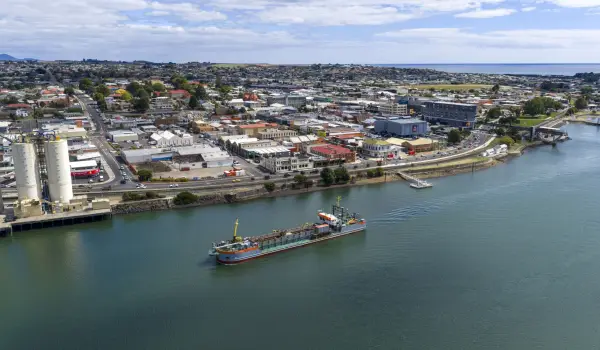
Dutch Dredging will use the trailing suction hopper dredger, Albatros.
A trailing suction hopper dredger works by lowering suction pipes to the seabed and pumping a mixture of sediment and water into an internal “hopper” or storage compartment. Once full, the dredge travels to the approved offshore disposal site and releases the material through doors in the bottom of the vessel.
The hopper dredger is equipped with technology to respond to fluctuations in water quality during dredging, including an overflow system designed to reduce fine sediments from being released at the surface of the water. By controlling how overflow water is discharged, turbidity is minimised, as is the potential for sediment dispersing beyond the dredging area.
Why was offshore spoil disposal selected?
TasPorts assessed 11 potential disposal options, including reuse, offshore placement and land-based disposal. Each option was evaluated for environmental, social and economic considerations.
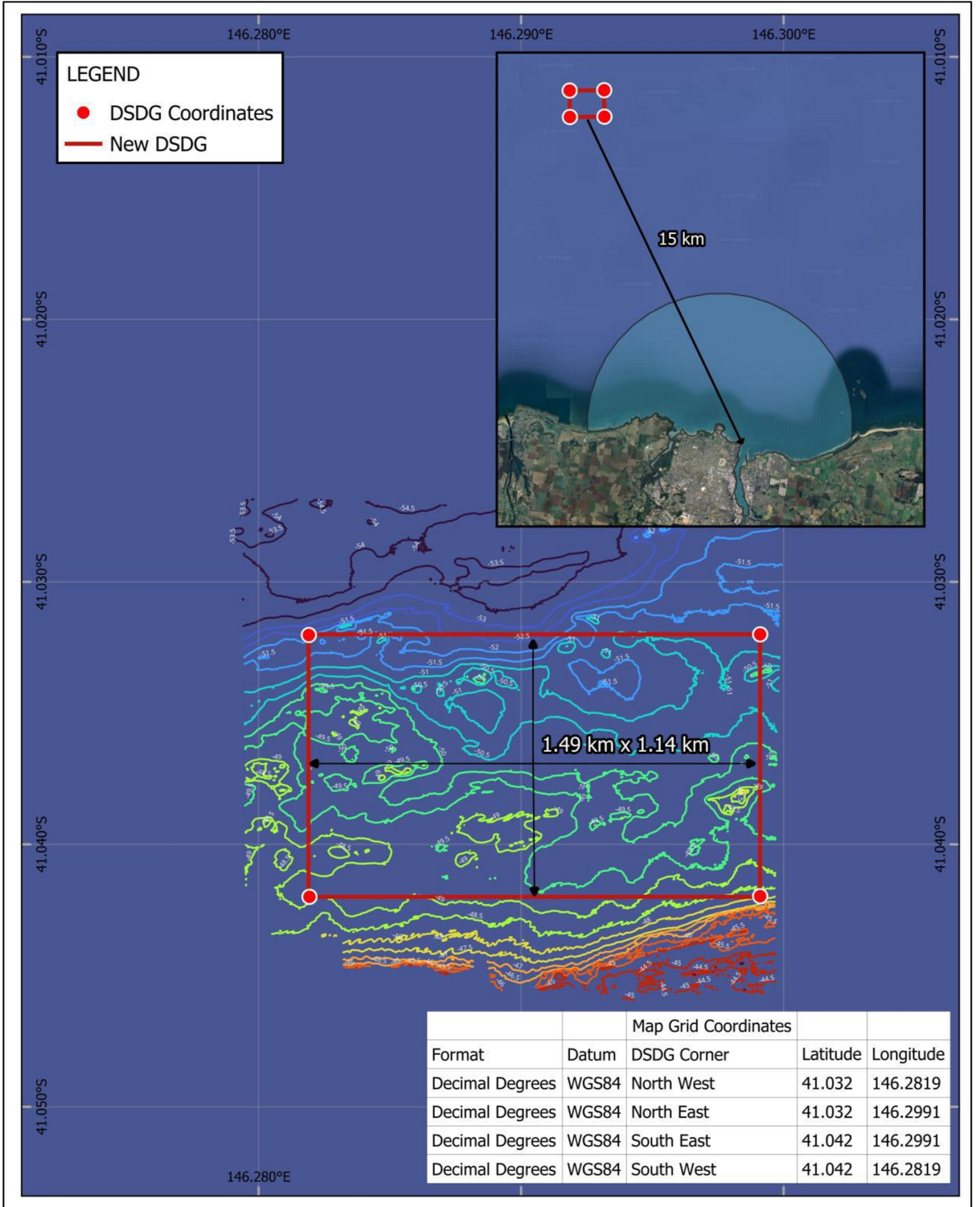
Following detailed investigations and modelling, a new designated offshore disposal site was determined to be the most suitable option.
The site was subsequently approved by the Australian Department of Climate Change, the Environment, Energy and Water (DCCEEW).
What areas will be dredged and where will the dredge spoil go?
Dredging will occur across the entire operational port area, including the outer and inner channels, basin, East Devonport and West Devonport.
Dredged material will be transported to TasPorts’ approved offshore disposal site, located approximately 15 km north‑west of the Port of Devonport.
How is TasPorts monitoring environmental conditions during the dredging campaign?
TasPorts has developed a Long-term Monitoring and Management Plan, which sets out a robust environmental framework for the duration of the dredging works.
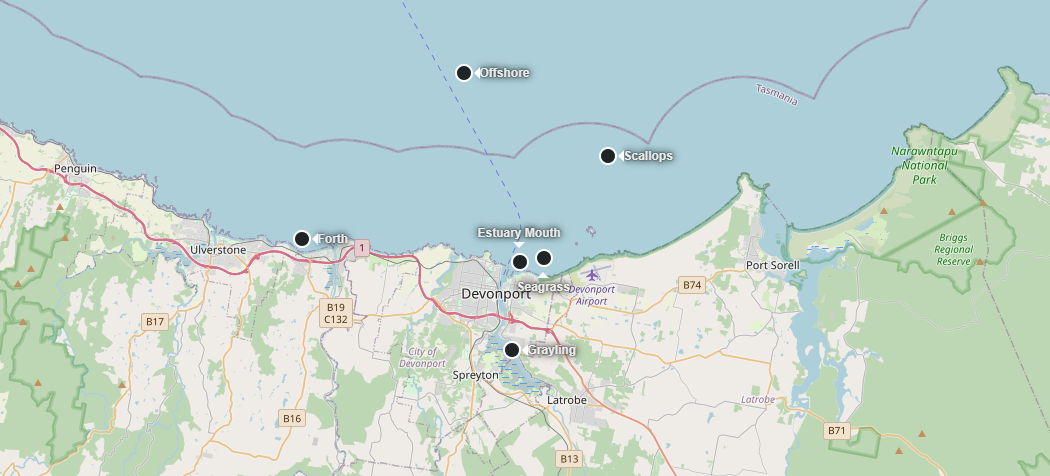
Six water-quality monitoring buoys are deployed near the Devonport port area and Mersey River, providing 24/7 real-time data. This enables TasPorts to detect and respond to any changes in water quality.
Both the Monitoring Plan and rolling water-quality data (6‑day and 15‑day averages) are available on the TasPorts website.
Will recreational and fishing areas be impacted?
Dredging operations are confined to the operational port area, and recreational and fishing areas will not be impacted.
For safety, mariners should navigate with caution and keep well clear of Albatros when it is operating.
Further information can be found in TasPorts’ Harbour Master Instruction, as well as Marine and Safety Tasmania’s (MAST) Notice to Mariners.