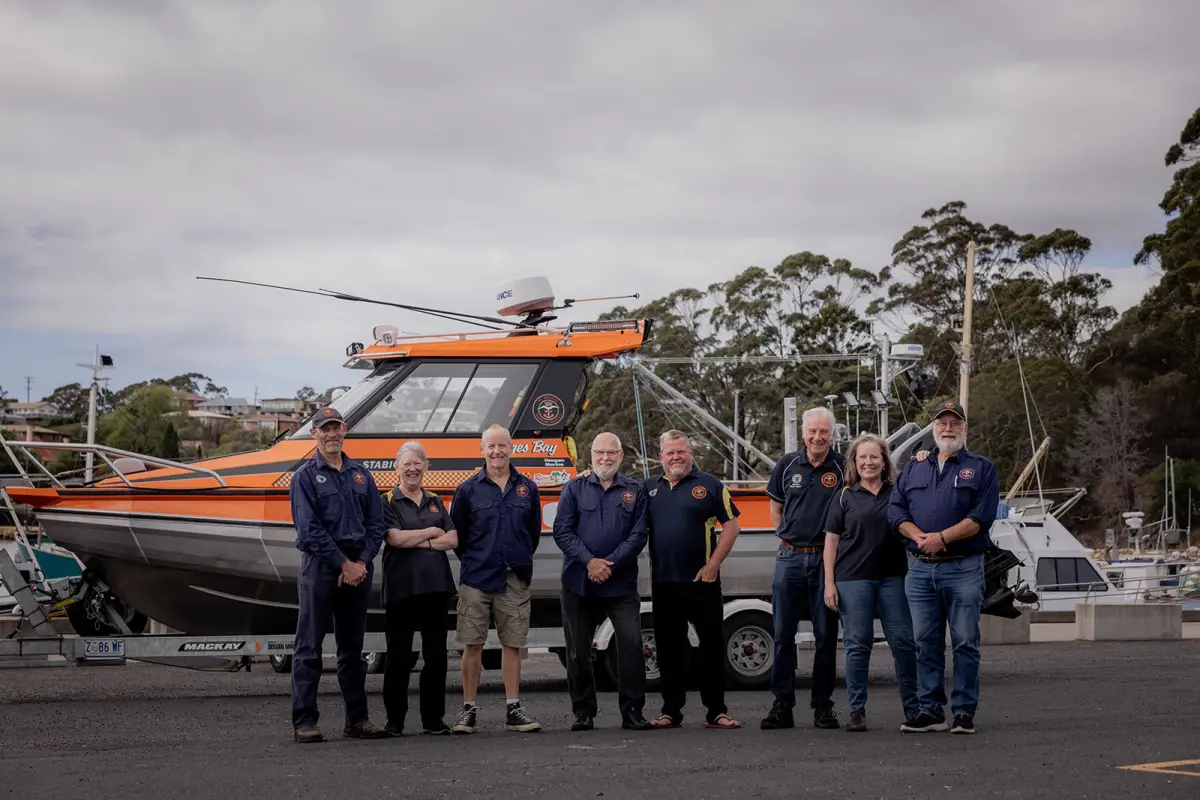
St Helens Marine Rescue vessels Georges Bay and Baliya use AIS technology to transmit real-time information, including their location, speed and heading.
However, when responding to incidents south of St Helens Point, the landscape can block signals from reaching the service's Base Station.
The new station provides more reliable tracking information for rescue crews and other maritime users, with the data also supporting Tas Maritime Radio, Tasmania Police and TasPorts Vessel Traffic Services.
Mr Wall said the project showed the dedication of local marine rescue volunteers and would deliver wider safety benefits.
"Projects like this demonstrate the commitment of volunteer marine rescue crews who go above and beyond to keep people safe on the water,” he said.
"Installing an AIS receiving station at South Sister Lookout was a significant undertaking, and the determination shown by St Helens Marine Rescue volunteers is commendable.
"The new station will help address a known coverage gap, improve situational awareness and provide more reliable vessel tracking information along this section of the east coast.”
St Helens Marine Rescue Secretary and Operations Manager John Sullivan said the project would improve safety for both rescue crews, and the wider boating community.
"This upgrade will make a real difference to how we keep our crews and the boating public safe,” Mr Sullivan said.
"Having more reliable AIS coverage means our radio operators can better track our vessels during challenging operations.
“We're grateful for the support from TasPorts and pleased to strengthen safety along our coastline."
For more information about the TasPorts Community Grant Program and how it supports local community initiatives, visit the Community Grant Program page.